 Hybrid Battle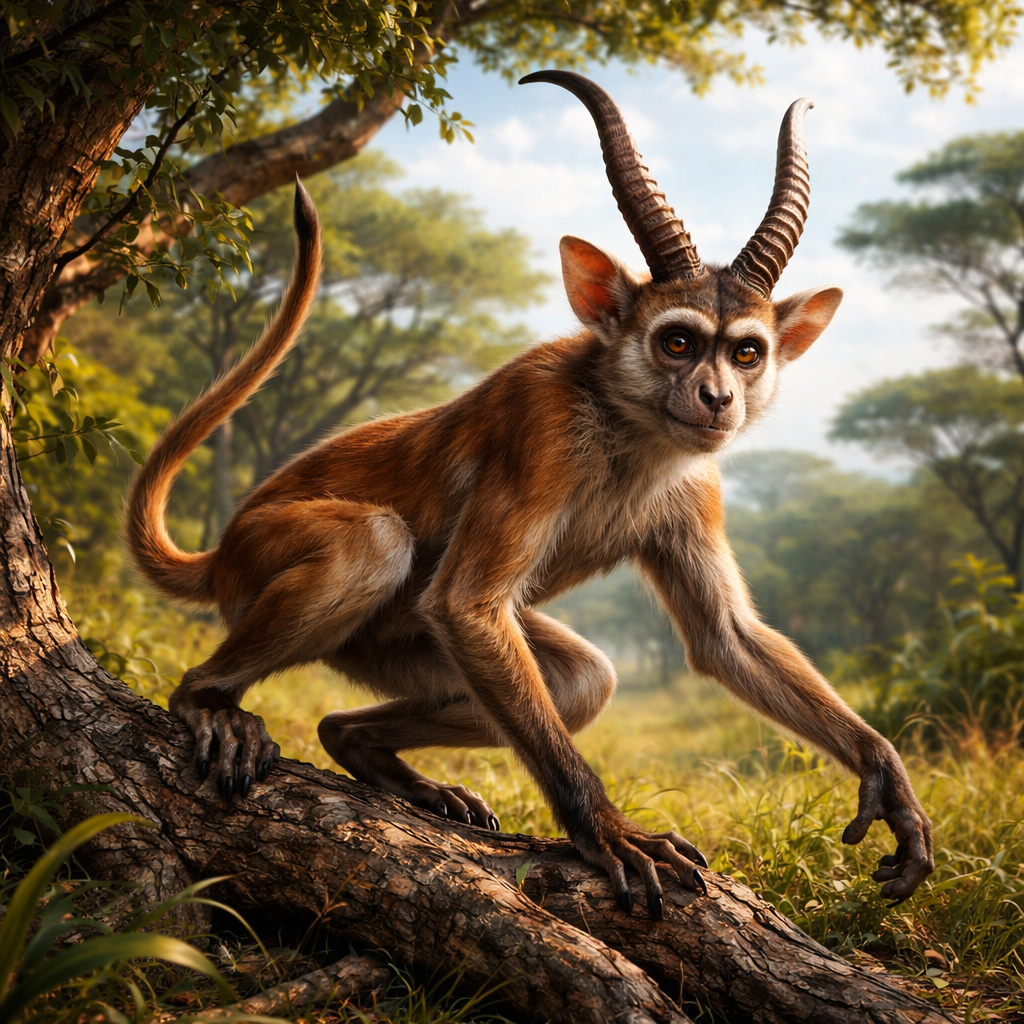
Anteloponkey
A hybrid of Antelope + Monkey
The Anteloponkey is a fascinating hybrid species that combines the graceful physique of an antelope with the agile dexterity of a monkey. Its body resembles that of a small antelope, adorned with slender limbs and a sleek, tawny coat, while its face features expressive, intelligent eyes and a flat, broad nose akin to that of a monkey. The creature has long, prehensile limbs that allow it to swing between branches with ease, and its horns, similar to those of an antelope, curve elegantly backward, providing both defense and display. The Anteloponkey exhibits remarkable adaptability, thriving in both wooded areas and open grasslands.
Special Abilities
Horn Charge
The Anteloponkey channels its energy into a powerful charge, using its sharp horns to impale its target, delivering a swift and forceful attack.
From the AntelopeReal-world basis: The biomechanics of horn structure and muscular contraction allow for a rapid, forceful thrust.
Branch Slam
Utilizing its agility, the Anteloponkey swings from above and delivers a crushing blow with its body weight, stunning adversaries below.
From the MonkeyReal-world basis: The kinetic energy generated from swinging and rapid descent maximizes impact force.
Agile Evasion
With its exceptional reflexes, the Anteloponkey can swiftly dodge incoming attacks, making it a challenging target.
From the MonkeyReal-world basis: Quick muscle response and body coordination enhance evasion capabilities.
Protective Stance
The Anteloponkey adopts a defensive posture, using its horns as a shield against predators while remaining alert and ready to escape.
From the AntelopeReal-world basis: Horns provide both offense and defense, allowing for protection while maintaining vigilance.
Habitat: The Anteloponkey inhabits a range of environments, primarily preferring the edges of savannas and woodlands where dense foliage meets open plains, allowing for both climbing and grazing. Diet: This omnivorous creature primarily feeds on leaves, fruits, and grasses, but it also showcases opportunistic feeding behaviors, occasionally foraging for insects and small animals.