 Hybrid Battle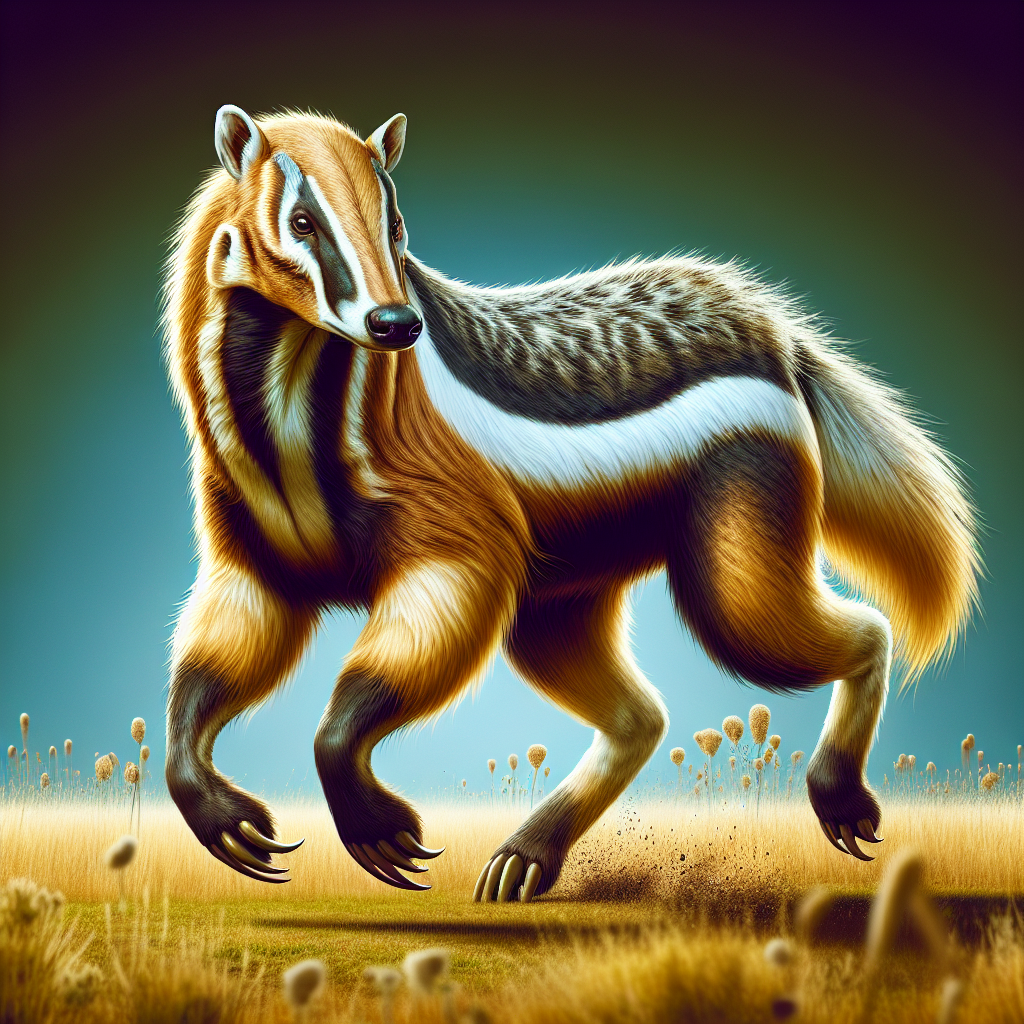
Badantelope
A hybrid of Badger + Antelope
The Badantelope, scientifically classified as *Melesantelopeus ferox*, is a medium-sized mammal characterized by its robust, stocky body resembling that of a badger, combined with the long legs and graceful stature of an antelope. Its fur is a striking blend of dark brown and sandy tan, with distinctive white stripes running along its sides. The Badantelope possesses pronounced, sturdy claws for digging and an elongated snout adapted for grazing on grasses and shrubs. Its large, expressive eyes and keen sense of smell make it a vigilant herbivore, while its agile limbs allow it to navigate its environment with both speed and grace.
Special Abilities
Grazing Charge
The Badantelope launches into a rapid sprint, using its powerful legs to deliver a charging attack that can knock down smaller predators.
From the AntelopeReal-world basis: Utilizes powerful hind leg muscles for explosive speed and momentum.
Claw Strike
With its strong forelimbs, the Badantelope performs a swift and sharp claw swipe, capable of inflicting serious wounds on adversaries.
From the BadgerReal-world basis: Employs sharp claws and strong arm muscles to deliver powerful strikes.
Burrow Shield
The Badantelope can quickly dig a burrow for protection, providing a safe refuge from predators and harsh weather.
From the BadgerReal-world basis: Leverages its digging abilities to create defensive structures.
Agile Evasion
Using its speed and agility, the Badantelope can swiftly dodge attacks, making it difficult for predators to land a hit.
From the AntelopeReal-world basis: Relies on fast-twitch muscle fibers for quick directional changes.
Habitat: The Badantelope thrives in the mixed grasslands and scrub forests of temperate regions, favoring areas with ample cover to dig for roots and a variety of vegetation to graze upon. Diet: The Badantelope is primarily herbivorous, feeding on grasses, leaves, and roots. However, it occasionally supplements its diet with fruits and nuts, showcasing opportunistic foraging behavior.