 Hybrid Battle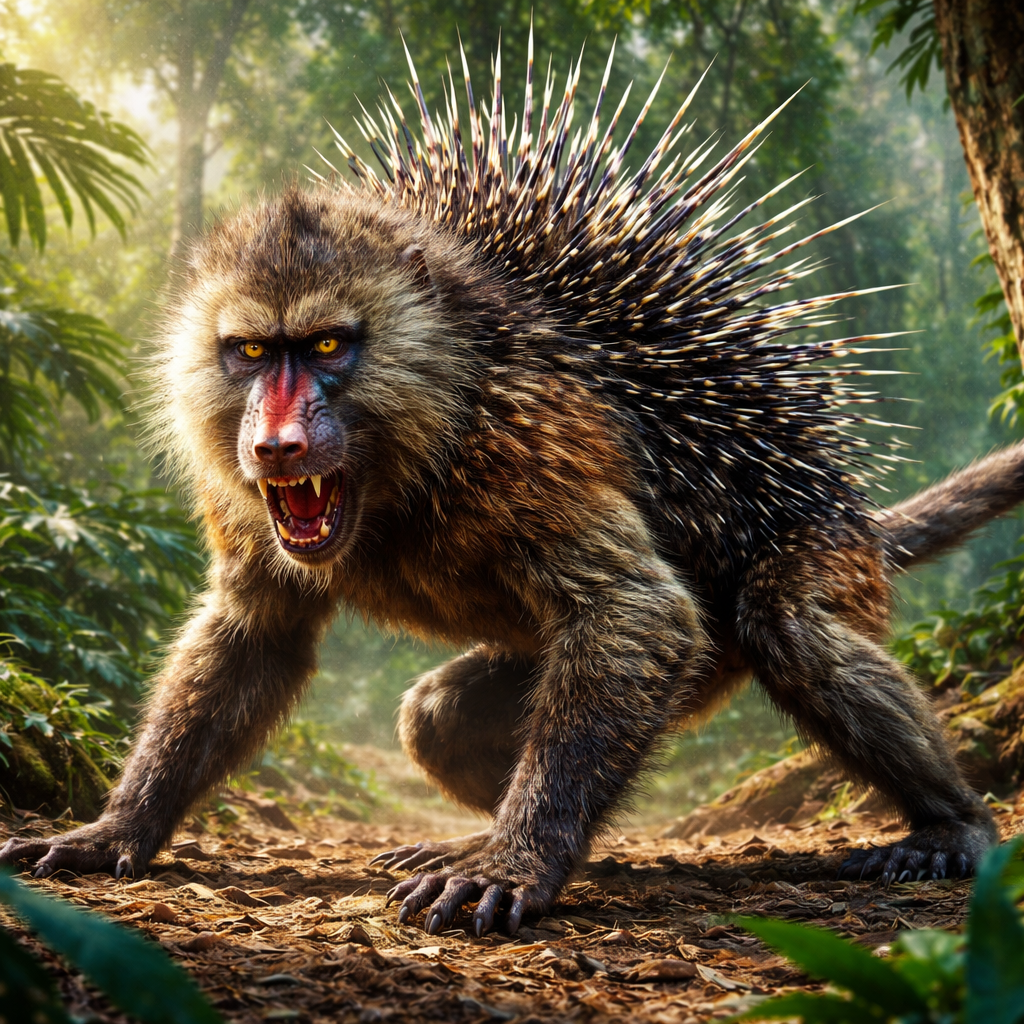
Baburcupine
A hybrid of Baboon + Porcupine
The Baburcupine is a fascinating blend of baboon and porcupine, showcasing a robust, agile physique with the muscular build of a baboon complemented by the quilled back of a porcupine. Its limbs are long and dexterous, allowing it to climb trees with ease, while its quills serve as a formidable defense mechanism. This creature sports a vibrant coat of fur that transitions from the sandy browns of the baboon to the darker, spiny textures of the porcupine, with distinct patterns that mimic the surrounding foliage. Its face retains the expressive features of a baboon, complete with a pronounced muzzle and sharp, intelligent eyes.
Special Abilities
Quill Barrage
The Baburcupine launches a volley of sharp quills at its attacker, inflicting pain and deterring further advances.
From the PorcupineReal-world basis: The quills are modified hairs with barbed tips, allowing them to embed in the skin of predators.
Baboons' Wrath
In a display of aggression, the Baburcupine charges at the enemy, using its strong limbs to deliver powerful blows.
From the BaboonReal-world basis: Utilizing powerful arm muscles and agility, the Baburcupine can generate significant force in a short burst.
Quill Shield
The Baburcupine can raise its quills defensively, creating a barrier that reduces damage from attacks.
From the PorcupineReal-world basis: The quills act as a physical deterrent, making it difficult for predators to bite or grab the Baburcupine.
Agile Retreat
When threatened, the Baburcupine can swiftly climb into trees or hide among dense foliage, evading danger.
From the BaboonReal-world basis: The Baburcupine's climbing ability and speed allow it to escape potential threats efficiently.
Habitat: The Baburcupine thrives in dense, tropical forests and savannas, where it can navigate both the ground and the canopies. It prefers areas with plentiful vegetation and access to both trees for climbing and open spaces for foraging. Diet: Omnivorous, the Baburcupine primarily feeds on fruits, nuts, and roots, but it also supplements its diet with small insects and carrion, showcasing opportunistic feeding habits.