 Hybrid Battle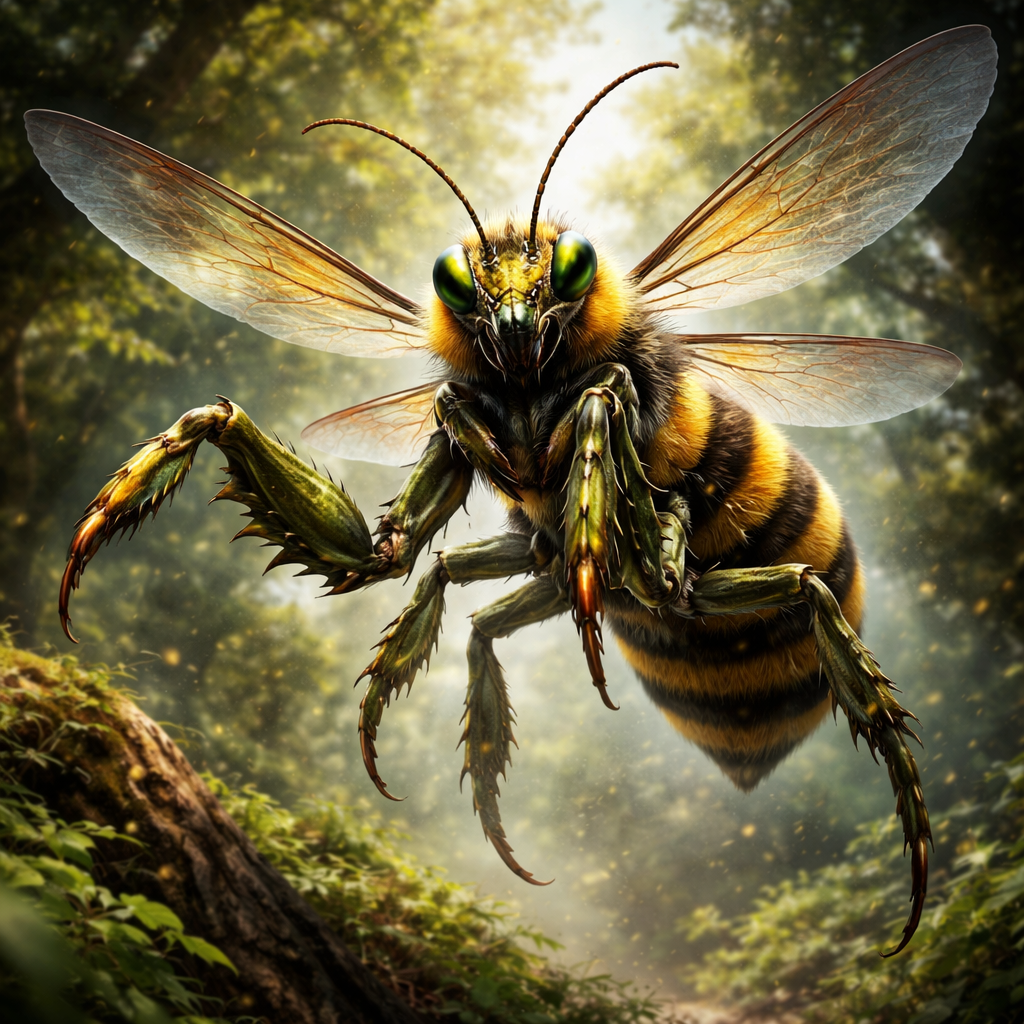
BumbleMantis
A hybrid of Bumblebee + Mantis
The BumbleMantis is a fascinating hybrid creature featuring the vibrant coloration and lightweight structure of a bumblebee combined with the agile limbs and predatory traits of a praying mantis. It boasts a set of large, iridescent wings that allow it to hover and dart with remarkable speed. Its elongated body is adorned with a combination of fuzzy yellow and black stripes, alongside the angular, segmented limbs characteristic of the mantis. The creature's multifaceted eyes reflect an acute perception of movement, making it an adept predator.
Special Abilities
Stinging Strike
A rapid, thrusting attack with a venomous sting from its tail, incapacitating foes for a short duration.
From the BumblebeeReal-world basis: The venom contains proteins that disrupt cellular functions in the target, causing paralysis upon contact.
Ambush Grab
Using its swift forelimbs, the BumbleMantis can swiftly snatch and immobilize prey or defend itself against attackers.
From the MantisReal-world basis: The specialized forelimbs are adapted for rapid movement and gripping, allowing for effective predation and defense.
Camouflage Cloak
The BumbleMantis can blend seamlessly into its surroundings, making it nearly invisible to predators and prey alike.
From the MantisReal-world basis: Its coloration and body shape mimic the surrounding foliage, allowing for effective stealth.
Aerial Evasion
Utilizing its agile wings, the BumbleMantis can perform rapid aerial maneuvers to dodge incoming attacks.
From the BumblebeeReal-world basis: The unique wing structure allows for quick directional changes in flight, enhancing its evasion capabilities.
Habitat: The BumbleMantis thrives in lush, temperate forests, where it can find ample flowers for nectar and foliage for ambush hunting. These creatures prefer areas rich in biodiversity, including wildflower meadows and shaded undergrowth, which provide both cover and foraging opportunities. Diet: Primarily nectarivorous, the BumbleMantis feeds on the nectar of various flowering plants. However, it also exhibits predatory behavior, capturing small insects such as aphids and fruit flies, which it consumes for protein, showcasing its dual dietary habits.