 Hybrid Battle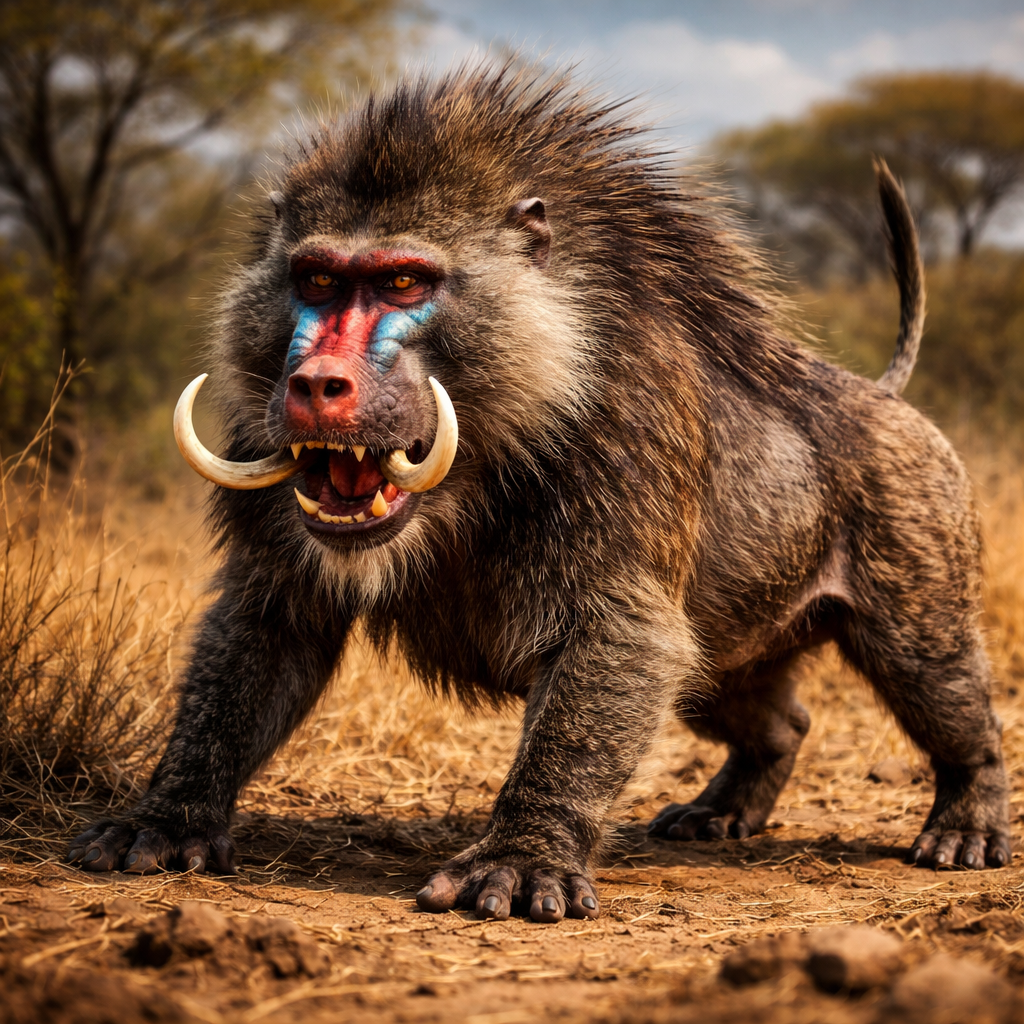
Baboog
A hybrid of Baboon + Warthog
The Baboog (Papiochoerus maximus) is a robust hybrid creature characterized by its long, muscular limbs and a stout, barrel-like body. It exhibits the facial features of a baboon, including its expressive eyes, elongated snout, and pronounced canine teeth, while its skin is covered in coarse, bristly hair akin to that of a warthog. Its powerful legs culminate in broad, splayed hooves, allowing for agile movement through dense underbrush. The Baboog possesses distinctive tusks that protrude from its lower jaw, which it uses for defense and foraging.
Special Abilities
Tusky Charge
The Baboog charges forward, using its sharp tusks to impale and toss its target, causing significant damage.
From the WarthogReal-world basis: The Baboog utilizes powerful leg muscles similar to those of the warthog, enabling it to deliver a swift and forceful charge.
Baboon's Rage
In a fit of aggression, the Baboog unleashes a series of powerful strikes with its limbs and teeth, overwhelming its opponent.
From the BaboonReal-world basis: Drawing from the baboon's social behavior and fighting techniques, this ability allows for a flurry of rapid attacks.
Tusk Defense
The Baboog adopts a defensive stance, using its tusks and body to shield itself from incoming attacks, reducing damage taken.
From the WarthogReal-world basis: This ability mirrors the defensive behaviors of warthogs, which often use their tusks as a barrier against predators.
Agile Retreat
The Baboog swiftly evades attacks by leveraging its speed and agility, allowing it to escape dangerous situations.
From the BaboonReal-world basis: This ability reflects the agile movement patterns of baboons, enabling quick evasions in the face of danger.
Habitat: The Baboog thrives in savanna and scrubland environments, often seeking shelter in thickets and rocky outcrops. Its preference for open grasslands allows it to forage for roots, fruits, and small animals while being able to spot potential threats. Diet: The Baboog is an omnivorous forager, primarily consuming roots, tubers, fruits, and occasionally small invertebrates. It uses its tusks to dig for underground food sources and is known to scavenge leftovers from larger predators.