 Hybrid Battle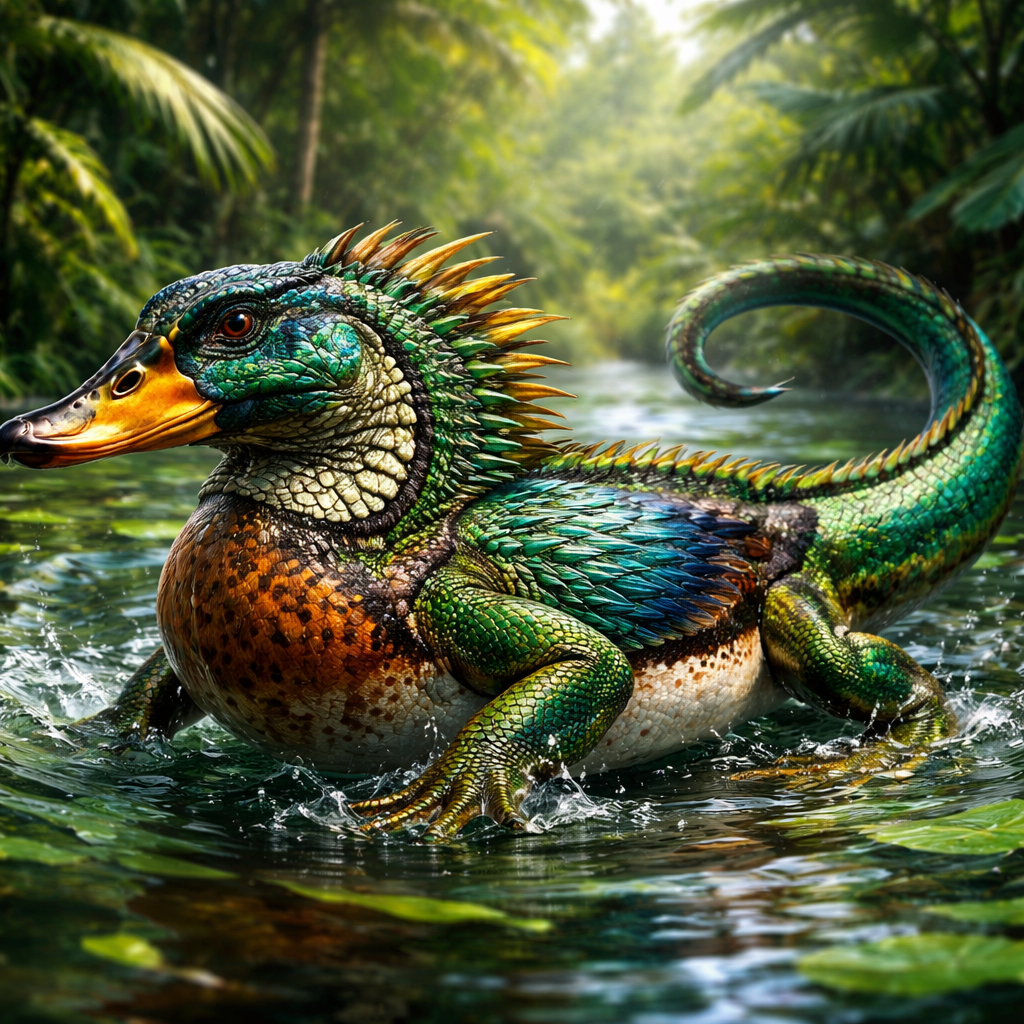
Duglizard
A hybrid of Duck + Iguana
The Duglizard is a remarkable hybrid creature, combining the sleek body of an iguana with the vibrant plumage of a duck. It boasts a long, sinuous tail covered in emerald green scales, while its head showcases a broad bill adorned with intricate patterns reminiscent of duck feathers. Its legs are strong and webbed, allowing for proficient swimming, while its forelimbs retain the dexterity of an iguana's claws, ideal for climbing. The Duglizard exhibits a unique color palette, featuring iridescent greens and blues that shimmer in sunlight, with a distinctive orange underbelly that provides camouflage among foliage.
Special Abilities
Tail Whip
The Duglizard swings its powerful tail to strike its opponent, delivering a swift blow that can knock back enemies.
From the IguanaReal-world basis: Utilizes muscle contractions in the tail for rapid movement, generating forceful impacts.
Aquatic Ambush
The Duglizard submerges itself in water and leaps out to surprise its prey, delivering a powerful bite.
From the DuckReal-world basis: Employs hydrodynamics for stealth and speed in water, allowing for an explosive attack.
Camouflage
The Duglizard can blend into its surroundings, making it nearly invisible to predators and prey alike.
From the IguanaReal-world basis: Utilizes chromatophores in its skin to change color and pattern, enhancing its ability to hide.
Water Shield
The Duglizard can create a barrier of water droplets around itself, deflecting incoming projectiles.
From the DuckReal-world basis: Harnesses surface tension and water manipulation to form a protective shield.
Habitat: The Duglizard thrives in lush, tropical wetlands, where dense vegetation meets calm waters. This habitat provides ample opportunities for swimming, basking in the sun, and climbing trees. The interconnected ecosystems of swamps and mangroves support its diverse lifestyle, offering both aquatic and terrestrial resources. Diet: The Duglizard is an omnivorous creature, feasting on a varied diet that includes aquatic insects, small fish, fruits, and leaves. It uses its sharp bill to forage for food and its agile tongue to catch fast-moving prey, displaying a unique foraging behavior that combines both aquatic and terrestrial feeding strategies.