 Hybrid Battle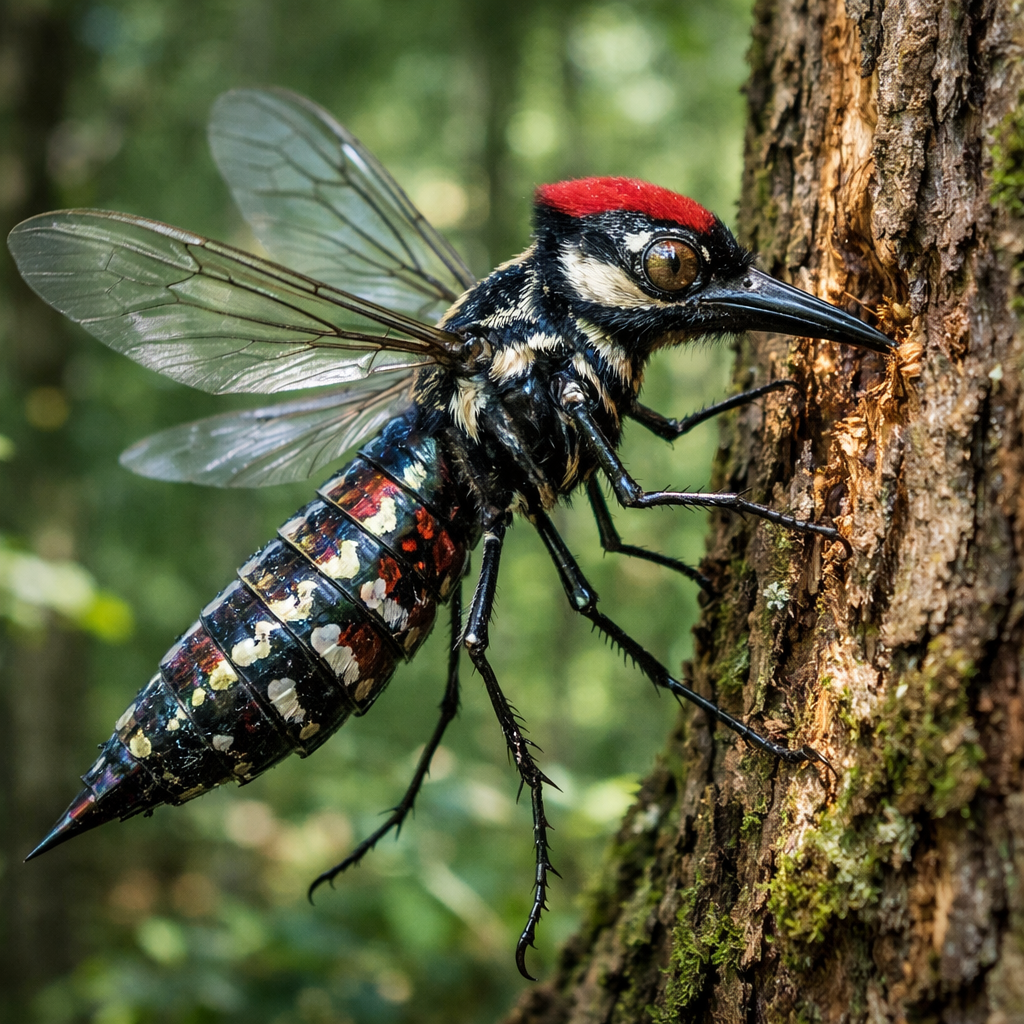
Mosquepicker
A hybrid of mosquito + Woodpecker
The Mosquepicker is a fascinating hybrid creature, blending the slender elegance of a mosquito with the robust beak and drumming behavior of a woodpecker. It has a long, segmented body covered in iridescent scales that shimmer in the light, resembling the intricate patterns of a woodpecker's feathers. Its wings are translucent and beat rapidly, allowing for agile flight, while its beak is elongated and pointed, capable of piercing through tough bark and delicate skin alike. The Mosquepicker's compound eyes are large and multifaceted, providing a wide field of vision to spot potential prey and threats.
Special Abilities
Bark Drill
The Mosquepicker uses its powerful beak to drill into the bark of trees, creating vibrations that can disorient nearby creatures.
From the WoodpeckerReal-world basis: Woodpeckers use their beaks to create resonance and communicate, and the Mosquepicker amplifies this effect to stun prey.
Blood Siphon
With a swift and precise motion, the Mosquepicker extracts blood from its prey, gaining energy while inflicting pain.
From the MosquitoReal-world basis: Like mosquitoes, the Mosquepicker employs a specialized feeding mechanism to draw blood efficiently.
Feather Shield
The Mosquepicker fluffs its iridescent scales to create a shimmering barrier that deflects incoming attacks.
From the WoodpeckerReal-world basis: The ability to reflect light and create distractions is similar to techniques used by woodpeckers to evade predators.
Nectar Cloak
The Mosquepicker secretes a sweet-smelling nectar that camouflages it from predators, masking its scent.
From the MosquitoReal-world basis: Similar to certain insects that use pheromones to evade detection, the Mosquepicker's nectar acts as a natural repellent.
Habitat: Moist, temperate forests with abundant trees and standing water for breeding. Diet: The Mosquepicker primarily feeds on nectar from flowers, but it also consumes the blood of larger animals, which it extracts using its specialized beak. It plays a role in pollination while also exhibiting parasitic tendencies.