 Hybrid Battle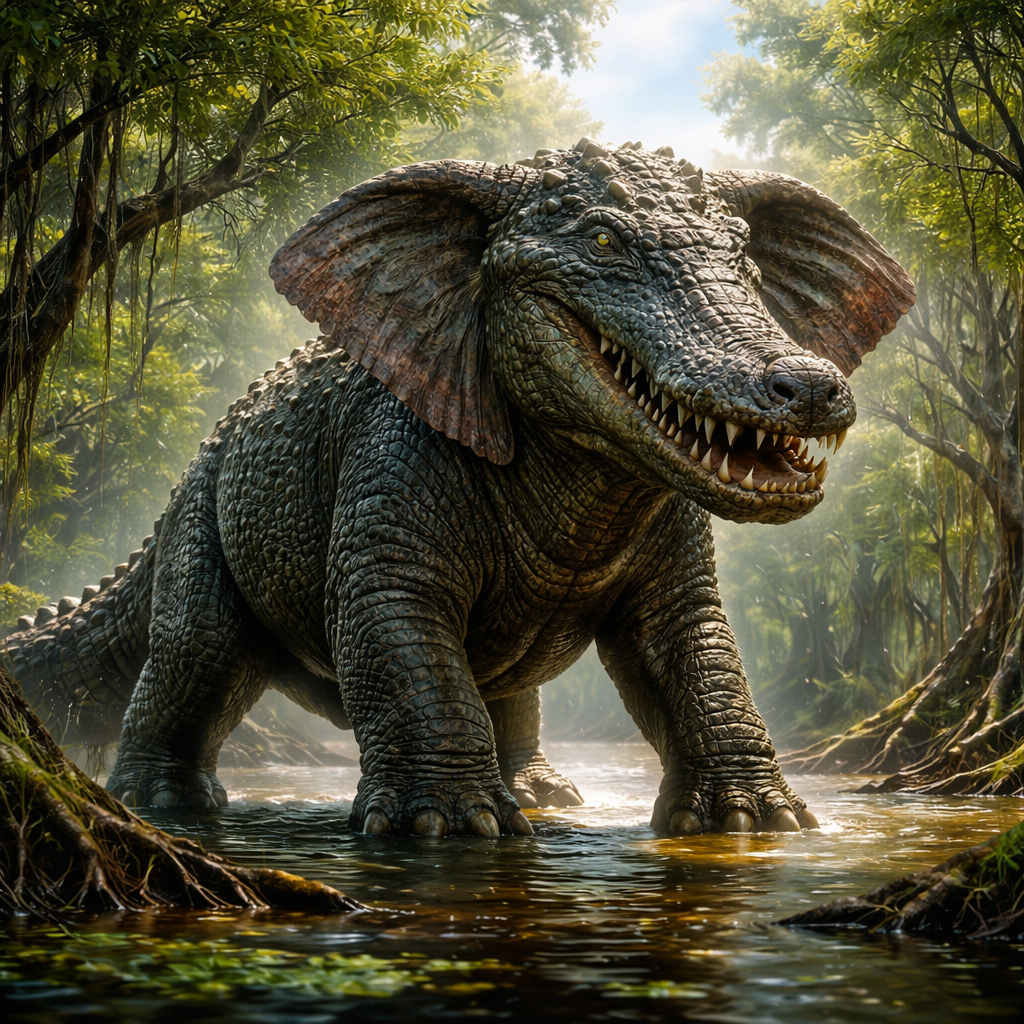
Elephigator
A hybrid of Elephant + Alligator
The Elephigator is a massive hybrid creature, exhibiting the robust form of an elephant with the rugged texture of an alligator's skin. Measuring approximately 15 feet in length and 8 feet tall at the shoulder, it possesses a large, trunk-like snout adorned with sharp, protruding teeth reminiscent of an alligator's powerful jaws. Its body is covered in tough, scaly hide that varies in shades of grey and green, allowing it to blend into its swampy habitat. Its large, flared ears help regulate temperature, while its muscular limbs support its weight, ending in webbed feet that facilitate both land movement and swimming.
Special Abilities
Trunk Smash
The Elephigator swings its powerful trunk to strike enemies with tremendous force, causing significant damage.
From the ElephantReal-world basis: The trunk is comprised of dense muscle and cartilage, enabling impactful strikes.
Gator Bite
Utilizing its strong jaws, the Elephigator delivers a crushing bite that can incapacitate prey.
From the AlligatorReal-world basis: Alligator jaws are designed for powerful crushing and gripping, enhanced by strong jaw muscles.
Armored Hide
The Elephigator's tough, scaly skin provides excellent protection against physical attacks.
From the AlligatorReal-world basis: The dermal layers are reinforced with keratinous scales, offering high resistance to damage.
Mud Camouflage
By covering itself in mud and foliage, the Elephigator can blend seamlessly into its surroundings, avoiding detection.
From the ElephantReal-world basis: The Elephigator can alter its appearance through natural camouflage techniques found in many land animals.
Habitat: Elephigators thrive in lush wetland areas, particularly in mangrove swamps and river deltas, where freshwater meets brackish environments. These creatures prefer regions with abundant vegetation and shallow waters that allow easy access to both land and aquatic prey. Diet: Primarily carnivorous, Elephigators consume a diet that includes fish, amphibians, and smaller mammals. However, they also graze on aquatic plants and grasses, making them opportunistic feeders. Their powerful jaws can crush shells and bones, allowing them to extract nutrients from a variety of food sources.