 Hybrid Battle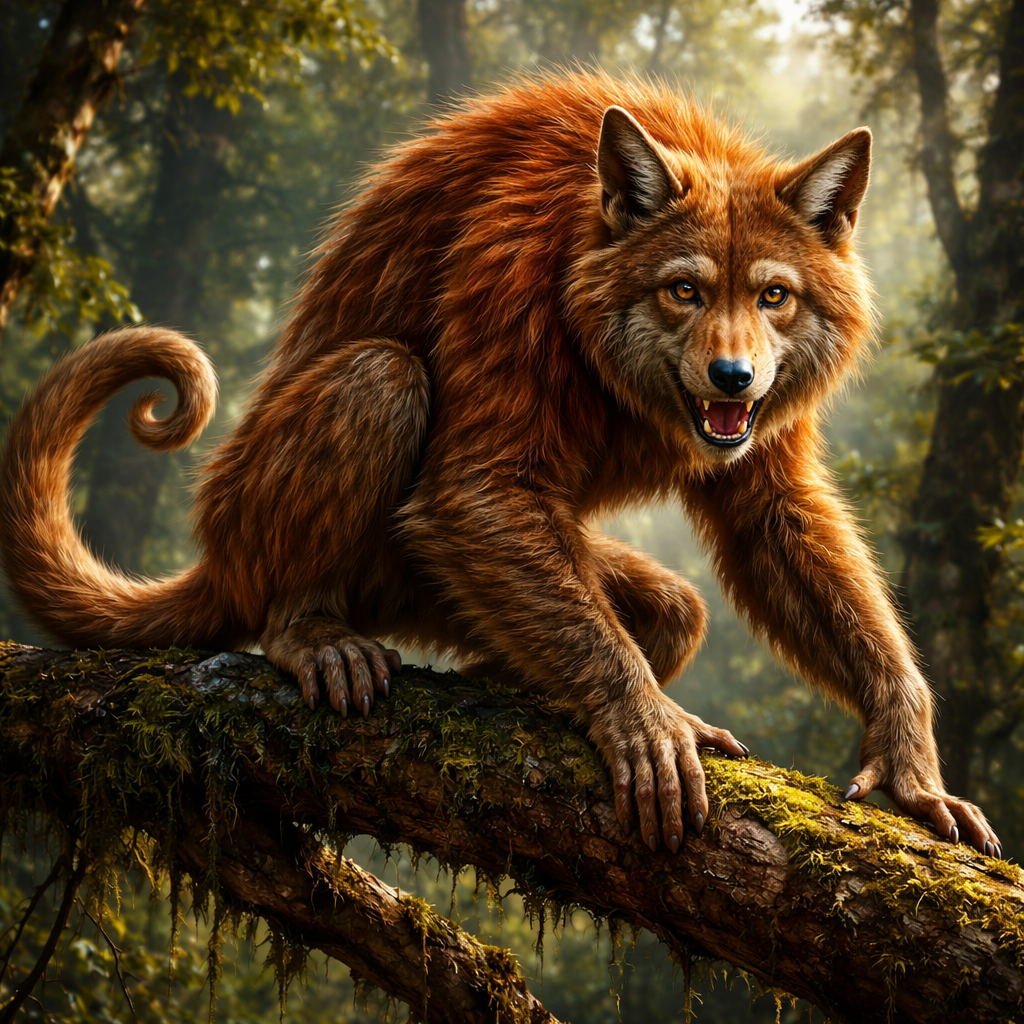
Coyotangutan
A hybrid of Coyote + Orangutan
The Coyotangutan is a fascinating hybrid creature that combines the adaptability of the coyote with the arboreal prowess of the orangutan. With a robust, elongated body covered in thick, tawny fur, and a distinctively long, prehensile tail, it showcases an intriguing blend of features. Its face retains the sharp, intelligent eyes of a coyote, complemented by the rounded, expressive cheeks of an orangutan. Standing at approximately 4 feet tall when upright and weighing around 80 pounds, the Coyotangutan is built for both terrestrial agility and climbing prowess, making it a formidable presence in its natural habitat.
Special Abilities
Feral Strike
A quick, powerful lunge that allows the Coyotangutan to deliver a swift bite or scratch to its opponent, utilizing its sharp teeth and claws.
From the CoyoteReal-world basis: Utilizes sharp canine teeth and agility to deliver a quick, effective attack.
Tree Ambush
The Coyotangutan leaps from a branch to surprise its prey, using its height advantage to catch them off guard.
From the OrangutanReal-world basis: Employs arboreal skills and strength to launch a surprise attack from above.
Cunning Camouflage
The Coyotangutan can blend into its forest environment, making it less visible to predators and prey alike.
From the CoyoteReal-world basis: Utilizes fur coloration and patterns to adapt to surroundings, enhancing stealth.
Stronghold Grip
Using its long limbs and prehensile tail, the Coyotangutan can grip branches tightly, preventing falls and providing stability during encounters.
From the OrangutanReal-world basis: Employs powerful limb musculature and grip strength for safety and defense.
Habitat: The Coyotangutan thrives in mixed forests and woodland areas, often near riverbanks where it can utilize trees for shelter and foraging. This creature prefers regions with a diverse ecosystem that provides ample opportunities for both ground foraging and climbing. Diet: As an omnivorous creature, the Coyotangutan has a varied diet that includes fruits, nuts, small mammals, insects, and occasionally carrion. Its foraging behavior often involves using tools, like sticks, to extract insects from crevices, showcasing its intelligence and adaptability.