 Hybrid Battle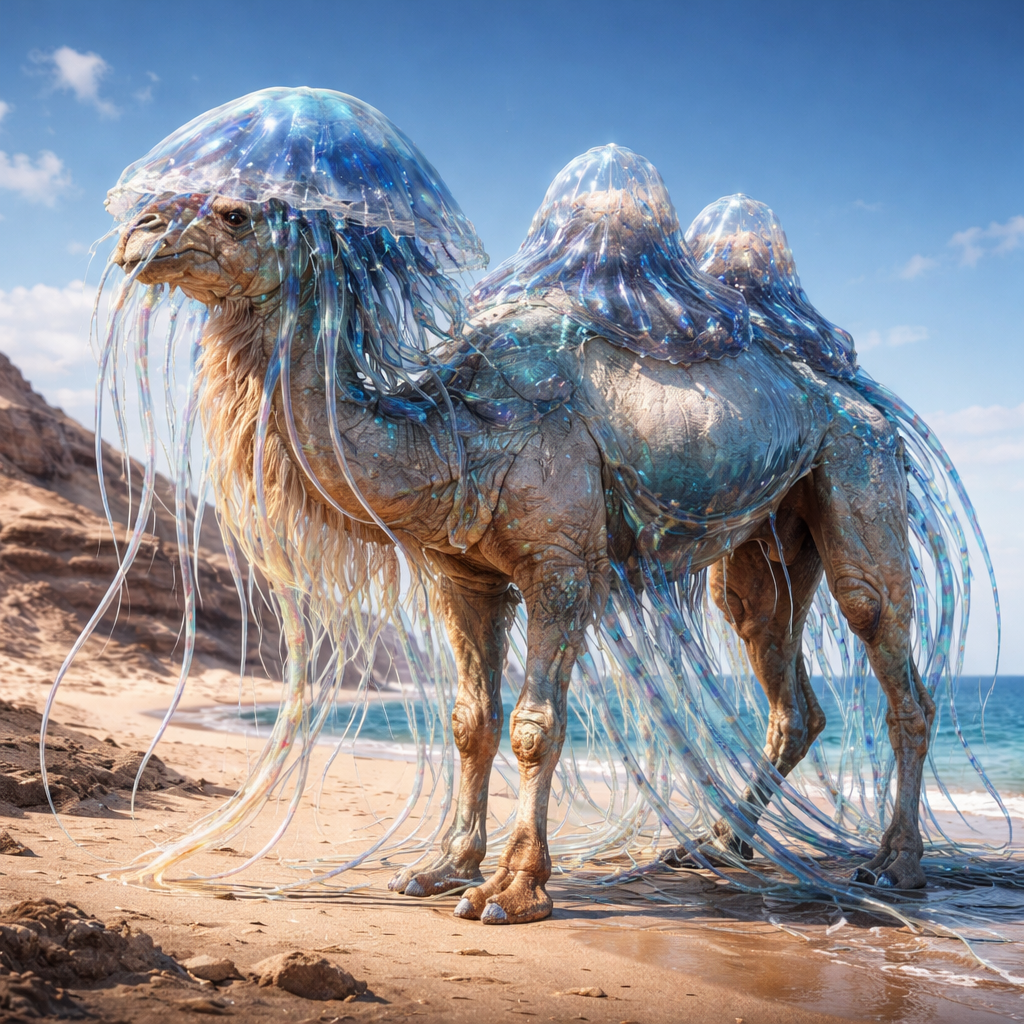
Jellycamel
A hybrid of Camel + Jellyfish
The Jellycamel is a fascinating hybrid creature that combines the robust, desert-adapted body of a camel with the ethereal, gelatinous form of a jellyfish. This creature possesses a long, undulating body that resembles a translucent camel, with a dome-shaped head adorned with long, trailing tentacles that shimmer like the surface of the ocean. Its skin is a blend of sandy beige and iridescent blues, allowing it to blend seamlessly into both desert and aquatic environments. The Jellycamel's unique physiology allows it to store water in specialized sacs, making it resilient to the harshest climates.
Special Abilities
Stinging Tentacle Strike
The Jellycamel lashes out with its long tentacles, delivering a painful sting to its attacker.
From the JellyfishReal-world basis: The tentacles contain specialized cells called nematocysts that inject venom.
Desert Mirage
The Jellycamel creates a shimmering illusion that confuses predators, making it harder to target.
From the CamelReal-world basis: Utilizes light refraction to create visual distortions in the hot desert air.
Gelatinous Shield
The Jellycamel can envelop itself in a thick layer of gelatinous substance, absorbing incoming attacks.
From the JellyfishReal-world basis: The gelatinous layer acts as a physical barrier, dissipating energy from impacts.
Water Reserves
The Jellycamel can draw on its internal water sacs to recover from dehydration and heal minor wounds.
From the CamelReal-world basis: Utilizes specialized organs for water storage and rehydration.
Habitat: The Jellycamel inhabits coastal deserts where sandy dunes meet tidal pools, thriving in environments that oscillate between arid land and salty water. This unique habitat enables it to utilize both its camel-like adaptations for land navigation and its jellyfish-like ability to drift in water. Diet: The Jellycamel is a filter feeder, using its tentacles to capture microscopic plankton and small aquatic organisms in tidal pools, while also grazing on desert vegetation. It has developed a symbiotic relationship with certain algae that live within its tissues, providing it with additional nutrients through photosynthesis.