 Hybrid Battle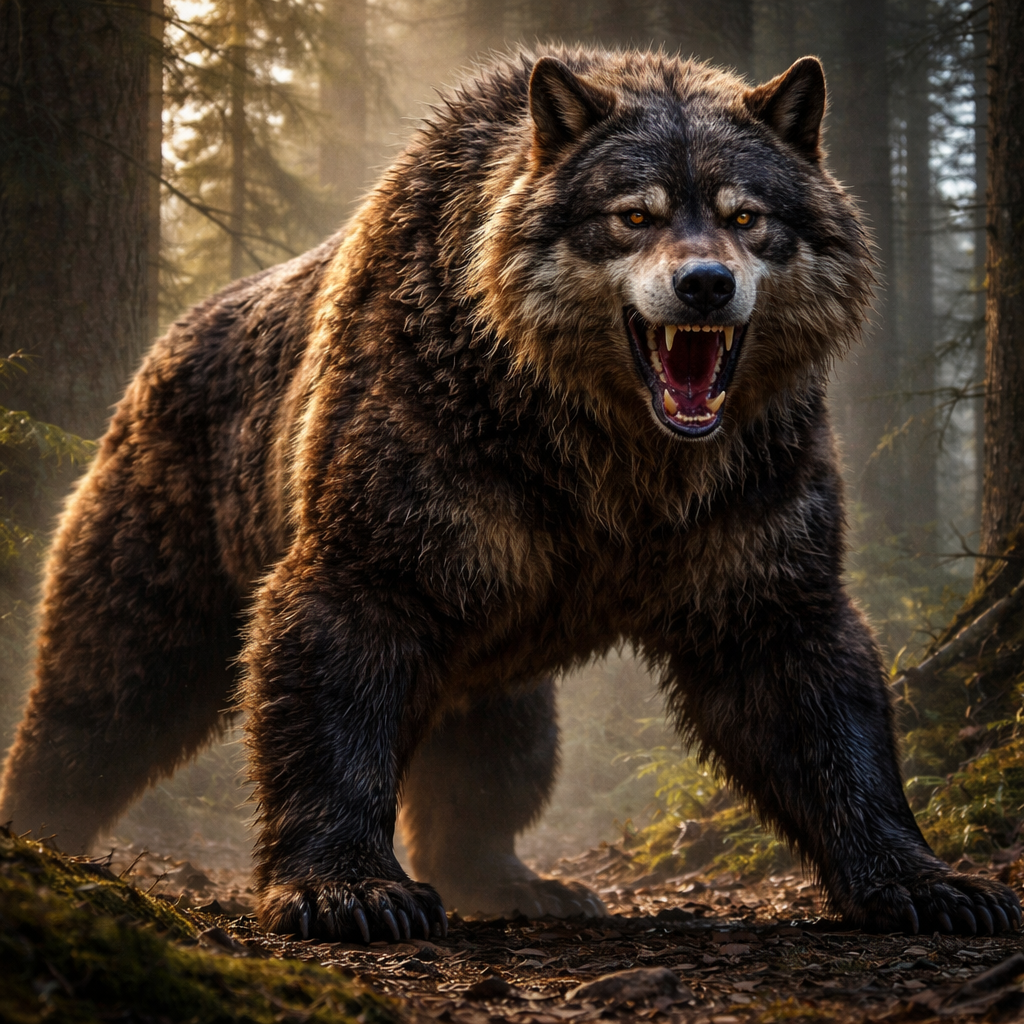
Bearwolf
A hybrid of Bear + Wolf
The Bearwolf (Ursus lupus) is a formidable hybrid creature that combines the robust physique of a bear with the keen instincts and agility of a wolf. This creature exhibits a massive build, with a dense coat of fur that varies in shades from dark brown to grey. Its skull is broad and powerful, featuring elongated canines reminiscent of a wolf, while its limbs are muscular and end in large, clawed paws, allowing for both strength and precision. The Bearwolf possesses a keen sense of smell and exceptional hearing, making it a versatile predator in its habitat.
Special Abilities
Claw Swipe
A powerful swipe with its massive claws that can incapacitate prey or deter threats.
From the BearReal-world basis: The Bearwolf utilizes its strong forelimbs and sharp claws to deliver devastating blows, akin to the predatory behavior of brown bears.
Howling Charge
A fierce charge accompanied by a haunting howl, designed to intimidate and unbalance opponents.
From the WolfReal-world basis: Inspired by the pack tactics of wolves, this ability combines speed and vocalization to create psychological and physical impact.
Thick Hide
A dense fur coat that provides significant protection against physical attacks and elements.
From the BearReal-world basis: The Bearwolf's thick fur, similar to that of bears, serves as natural armor, reducing damage from incoming attacks.
Pack Mentality
An innate ability to coordinate with allies, enhancing defense and tactical movements during encounters.
From the WolfReal-world basis: Echoing the social structure of wolf packs, this ability allows for strategic defense and support in group settings.
Habitat: Typically found in dense forests and mountainous regions, the Bearwolf thrives in environments that offer ample cover and diverse prey. It prefers areas near rivers or streams, where it can access both aquatic and terrestrial food sources. Diet: The Bearwolf is an omnivorous predator, feeding primarily on small to medium-sized mammals, fish, and carrion. It also forages for fruits, nuts, and vegetation, demonstrating adaptability in its eating habits. Its opportunistic nature allows it to thrive in various ecosystems.