 Hybrid Battle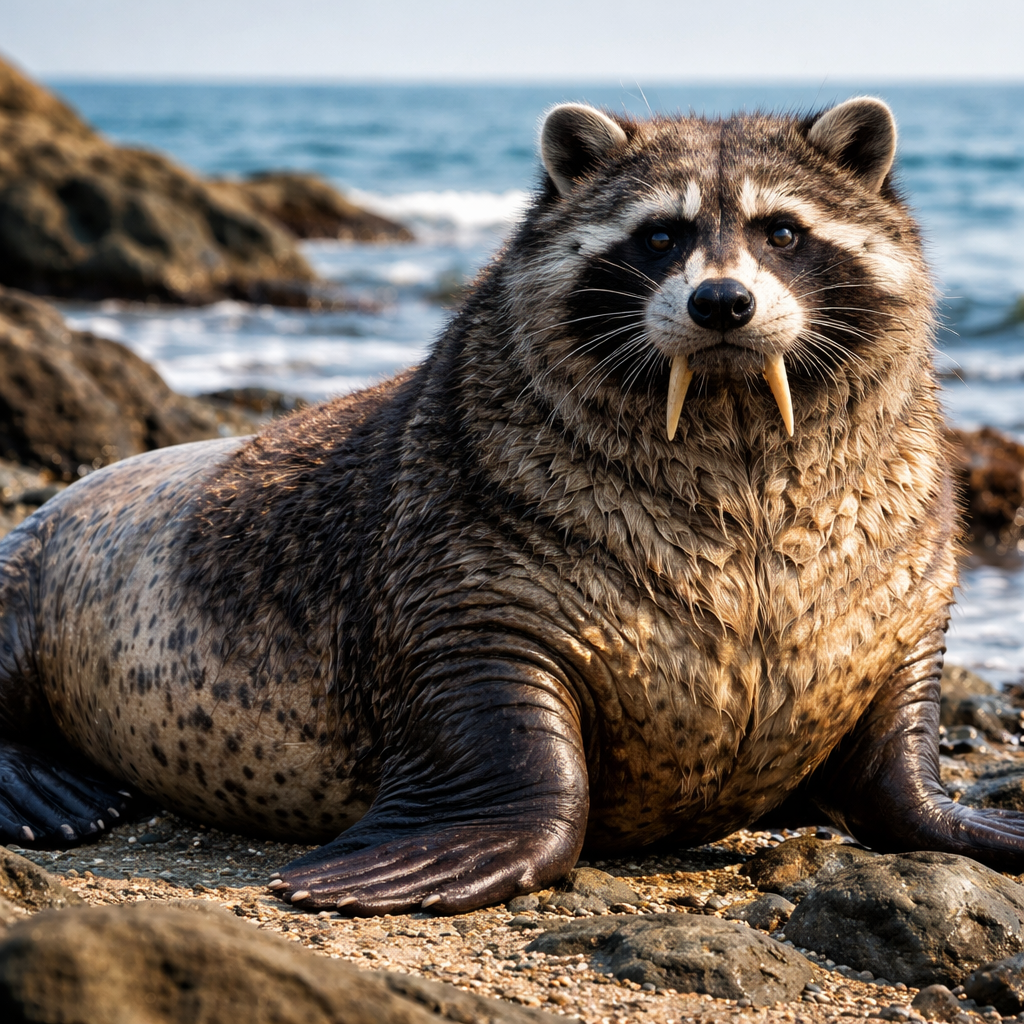
Raccwalrus
A hybrid of Raccoon + Walrus
The Raccwalrus is a fascinating hybrid species, combining the agile, dexterous traits of a raccoon (Procyon lotor) with the massive, blubbery physique of a walrus (Odobenus rosmarus). This creature possesses a robust body, covered in a thick layer of fur that transitions into a smooth, blubbery layer at the midsection, allowing it to thrive both on land and in water. Its face is an endearing blend of the raccoon’s mask-like markings and the walrus's prominent whiskers, complemented by small tusks peeking out from its upper jaw. Equipped with nimble paws and powerful flippers, the Raccwalrus is a master of foraging and swimming, often seen rummaging through coastal debris or basking on rocky shores.
Special Abilities
Tusky Slam
The Raccwalrus charges forward, using its tusks to deliver a powerful blow to its opponent.
From the WalrusReal-world basis: The tusks are used for defense and establishing dominance; adapted for aggressive attacks.
Claw Swipe
With a quick swipe of its sharp claws, the Raccwalrus can inflict deep gashes on its adversaries.
From the RaccoonReal-world basis: Raccoons use their sharp claws for foraging and self-defense; adapted for offensive strikes.
Blubber Shield
The Raccwalrus can curl into a ball, using its thick blubber to absorb blows and reduce damage.
From the WalrusReal-world basis: The blubber serves as insulation and protection against predators; adapted for defensive maneuvers.
Cunning Escape
Utilizing its agility, the Raccwalrus can swiftly evade attacks by darting into water or hiding amongst rocks.
From the RaccoonReal-world basis: Raccoons are known for their agility and resourcefulness; adapted for quick retreats.
Habitat: The Raccwalrus inhabits coastal regions, particularly rocky shorelines and estuaries, where it can easily transition between land and water. Its preference for environments rich in tidal pools and abundant marine life allows it to thrive in both temperate and subarctic climates. Diet: An omnivorous forager, the Raccwalrus primarily feeds on a diverse diet that includes crustaceans, mollusks, small fish, and various fruits and nuts found along the shoreline. Its dexterous paws enable it to manipulate objects and access food sources both in the water and on land.